May 4, 2012

First Week Recap


As the first "official" week of turtle season comes to a close, it seems the islands are off to a great start! Sanibel has a total of seven nests and Captiva has five nests as of today. Last year at this time Sanibel and Captiva had four nests and one nest, respectively
Loggerhead turtle crawl. Photo by: A.Bryant

Sanibel and Captiva strive to keep our beaches turtle friendly. As visitors and residents enjoy the islands' beaches, please keep the following in mind:
  • Shield of turn off all beachfront lighting
  • Remove all furniture and toys from 9 pm to 7 am
  • Honor the leash law
  • Keep the beaches free of trash
  • Respect all staked nests
  • Never approach a nesting turtle
  • Avoid using flashlights and flash photography on the beach at night
 

April 27, 2012

Let the Crawling Begin!


The first loggerhead turtle nest on Sanibel of 2012.
Each sea turtle season distinguishes itself in some way. So far, 2012 will be the season with the earliest start. Captiva had the first nest on April 20 and Sanibel wasn’t far behind with nests on April 25 and 26. This sets a new record for early nesting by Loggerhead turtles on the Islands. We were expecting nesting to begin earlier than usual due to the mild winter and warm temperatures in the Gulf of Mexico, but not quite this early! One of the big benefits to the early start will be that nests will hatch before we start to see any tropical storms or hurricanes in the Gulf, enabling more hatchlings to safely make it to the water.

March 7, 2012

Red Tide Turtles Released


A red tide bloom began at the end of November and lasted until approximately mid-January at the mouth of San Carlos Bay. Many species including birds, fish, and sea turtles were affected by the toxin produced by the red tide organism Karenia brevis. During this time frame, a total of 11 Kemp’s ridley turtles were found on and near Sanibel. Nine were dead and two were found alive and taken to rehabilitation facilities.
A newly released juvenile Kemp's ridley. Photo by: R. Flynn

The two live turtles from Sanibel and an additional Kemp’s ridley from Lover’s Key State Park were released into Pine Island Sound on February 27 after receiving a clean bill of health. The SCCF Marine Lab provided boat transportation. SCCF staff were accompanied by Rhonda Bailey of the Florida Fish and Wildlife Conservation Commission and Eve Haverfield of Turtle Time, Inc. A video of the release can be seen at http://youtu.be/ij2FtWeDY14.

February 13, 2012

Scientists Begin to Pinpoint Foraging Grounds

Researchers with Mote Marine Laboratory, the U.S. Geological Survey, and the University of Florida have shed some light on where loggerheads are going when they leave the beach after nesting. Turtles were tracked from Casey Key, the Dry Tortugas, and Cape San Blas with satellite tags. Despite leaving from different beaches, the turtles ended up in similar areas off the coast of Southwest Florida and the Yucatan Peninsula.

This new information gives scientists a better idea of the areas, other than beaches, that are important to loggerhead turtles. Knowing this, can aid decision makers when it comes to protecting essential areas from fishing and oil drilling. More on this exciting research can be found here- http://www.heraldtribune.com/article/20120206/ARTICLE/120209667?p=2&tc=pg

January 16, 2012

2011 Sea Turtle Season


While no sea turtle season could ever be considered dull, this season proved to be full of surprises. We documented more rare species nesting on the islands than ever before. Sanibel’s nesting season started with the nesting of a rare Kemp’s ridley (Lepidochelys kempii) and continued with a total of seven green turtle (Chelonia mydas) nests. Captiva even got in on the fun with the first green nest documented on the island since 2007. In all, Sanibel had a total of 277 nests and 443 false crawls and Captiva had 75 nests and 54 false crawls.

A green turtle nest laid on Sanibel.
2011 was the sixth best year for nesting since 1996 on the islands.  The overall hatch success (the percentage of eggs to hatch) was 67.7% for Sanibel and 70.4% for Captiva.  The emergence success (the percentage of a nest’s hatchlings to leave the nest) was 59.7% for Sanibel and 61.9% for Captiva.  This is compared to last year’s hatch success of 65.75% and emergence success of 60.3% on Sanibel and 57.34% on 45.8% respectively on Captiva.  Overall, the islands produced approximately 25,411 eggs and approximately 15,786 hatchlings reached the Gulf.

October 10, 2011

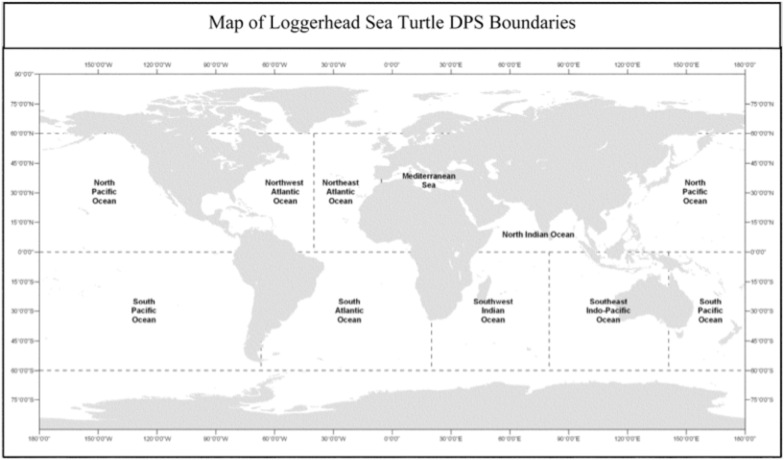
Loggerhead Populations Get Increased Protection

Last month the National Marine Fisheries Service (NMFS) and the U.S. Fish and Wildlife Service announced the listing of nine distinct loggerhead turtle (Caretta caretta) populations under the Endangered Species Act. Since 1978, the worldwide loggerhead population has been considered as one species and listed as threatened. September’s announcement means that each population will be listed separately and bears a different listing status. Four populations will remain listed as threatened (Northwest Atlantic Ocean, South Atlantic Ocean, Southeast Indo-Pacific Ocean, and Southwest Indian Ocean), while five populations (Mediterranean Sea, North Indian Ocean, North Pacific Ocean, and South Pacific Ocean) are now listed as endangered. Southwest Florida’s loggerhead turtles fall into the Northwest Atlantic population and will maintain their threatened.status.

For more information on loggerhead turtles and the change to their status, visit NMFS's Office of Protected Resources.

Source: http://www.nmfs.noaa.gov/pr/pdfs/fr/fr76-58868.pdf

October 7, 2011

Save Sea Turtles (and Other Wildlife) Every Time You Mail a Letter

Don't let the tiger fool you, the newest semipostal stamp issued by the U.S. Postal Service will benefit not only tigers, but marine turtles, elephants, great apes, and rhinoceroses, too. The “Save Vanishing Species” stamp costs 55¢ or $11 for a book. The additional 11¢ per stamp benefits the U.S. Fish and Wildlife Service’s Multinational Species Conservation Funds. Do your part to save vanishing species by sending your next letter with a “Save Vanishing Species” stamp!